Houston Medical Practices

Medical Office Cleaning Houston — Clinics, MOBs, Urgent Care & Specialty Practices

Houston has the largest medical complex in the world — the Texas Medical Center spans 60+ institutions and 50M annual patient visits. Add Memorial Hermann, Houston Methodist, Baylor, MD Anderson, Texas Children's, plus thousands of independent clinics. Outpatient practices need cleaning that's HIPAA-aware, OSHA Bloodborne Pathogen-trained, color-coded for cross-contamination prevention, and stocked with EPA-registered hospital-grade disinfectants. We deliver all of it — and we're the vendor your practice administrator wishes was always on the contract.

HIPAA-aware crews OSHA Bloodborne Pathogen-trained EPA hospital-grade disinfectants Color-coded microfiber Outbreak-response surge No long-term contracts
Most Houston-area medical office requests answered same business day.
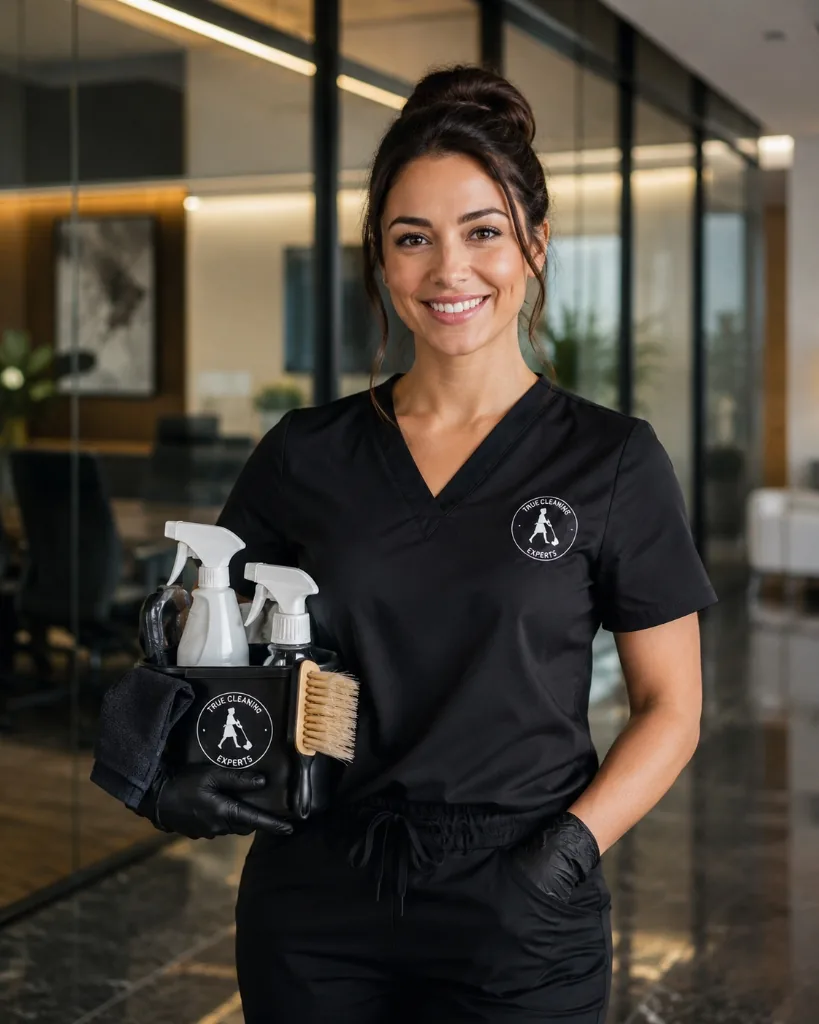
Professional medical office cleaning technician in Houston sanitizing clinical healthcare surfaces
Trusted Across Greater Houston From single-doctor clinics in Bellaire to multi-tenant MOBs inside the Texas Medical Center, our medical crews keep your practice audit-ready and infection-conscious every shift.
Insured & Bonded
$2M general liability
Background-Checked Crews
W-2 staff, uniformed
OSHA & EPA Standards
List N disinfectants
Houston-Owned Since 2016
Woman-owned, family-run
No Long-Term Contracts
30-day cancellation
Free Walkthrough in 24h
Custom proposal in 48h
60+
Institutions in the Texas
Medical Center (TMC)
50M
Annual TMC patient visits
(largest medical complex on earth)
4
Color-coded microfiber zones
(RED · BLUE · YELLOW · GREEN)
9 yrs
Cleaning Houston facilities
since 2016
Why Houston Practices Choose TCE

Outpatient cleaning is a different job — and Houston is where it matters most

Houston is home to the Texas Medical Center, the largest medical complex on earth. TMC alone spans more than 60 institutions, sits on 1,345 acres at the edge of Hermann Park, and sees over 50 million patient visits a year. Memorial Hermann, Houston Methodist, Baylor College of Medicine, MD Anderson Cancer Center, Texas Children's, Ben Taub, and the VA all anchor inside it. Around them, in Memorial, the Galleria, Bellaire, the Heights, River Oaks, the Energy Corridor, Sugar Land, and The Woodlands, sit thousands of independent practices — internal medicine groups, urgent care chains, specialty clinics, pediatric practices, ambulatory surgery centers, imaging centers, and the multi-tenant medical office buildings (MOBs) that house them all.

Cleaning these spaces is not the same job as cleaning a tech office downtown. The patient is the priority, the regulator is real, and the line between janitorial work and clinical work has to stay bright at all times. Old vendors blur it constantly. We've walked into Houston practices where the same mop swung through the lobby, the exam rooms, the staff break room, and the patient restroom — a textbook color-coded-microfiber failure that the OSHA inspector would have flagged in five minutes. We've heard about cleaners photographing exam rooms for their personal Instagram. We've heard about staff finding a sharps container kicked under a counter because the night cleaner didn't know what it was.

Outpatient practices need cleaning that's HIPAA-aware — and that's a careful word. HIPAA does not certify individual cleaners; the law applies to covered entities and their business associates. What we do is brief our crews, on day one, on patient privacy: never read charts, never read screens, never photograph an exam or treatment area, never engage families about clinical information, never discuss patients in or out of the building. We sign Business Associate Agreements when your privacy officer wants one on file. We re-brief annually. That's how a serious medical-cleaning vendor handles HIPAA, and it's how we handle it from the first walkthrough.

Outpatient practices also need cleaning that's OSHA Bloodborne Pathogen-trained. The OSHA Bloodborne Pathogen Standard — 29 CFR 1910.1030 — governs every facility where staff might encounter blood or other potentially infectious material. Cleaners aren't the front line, but we're inside the exposure-control plan. Our crews are trained on universal precautions, PPE use, the policy that all blood and body fluids are treated as potentially infectious, and the strict policy that we never handle sharps, biohazard bags, regulated medical waste, or contaminated linen. That work belongs to clinical staff and licensed medical-waste haulers. We clean around it, we never touch it, and we flag it immediately when something is at capacity.

Outpatient practices need cleaning that uses EPA-registered hospital-grade disinfectants — not the household-grade "smells like cleaning" sprays that linger from prior vendors. Our standard kit includes quaternary ammonium (QUAT) for general high-touch surfaces, accelerated hydrogen peroxide for high-risk surfaces and faster contact times, and sodium hypochlorite (bleach) at proper dilution for C. diff, norovirus, and active outbreak responses. We pull from EPA List N, List K, and List L when those pathogens are part of your protocol. We respect dwell times — wiping a surface dry before contact time elapses is the single biggest mistake we see from prior vendors and the easiest one to fix.

Outpatient practices need color-coded microfiber zones that prevent cross-contamination by design, not by hope. We follow the ISSA/healthcare standard: RED for restrooms and trash zones, BLUE for general patient and lobby areas, YELLOW for exam, procedure, and high-risk surfaces, GREEN for break rooms and food-prep areas. Cloths and mop heads are never crossed between zones, are laundered and replaced after each shift, and the system is auditable on any walkthrough. If your previous vendor didn't have a color-coded mop closet on day one, they didn't have a system. They had a hope.

Finally, outpatient practices need a cleaning vendor who treats outbreak response as a built-in feature, not a panic call. Flu seasons spike in Houston every year. RSV-heavy weeks crush pediatric clinics. Norovirus walks in unannounced. COVID exposures still happen. C. diff and MRSA require specific disinfectant chemistries (sodium hypochlorite for C. diff — QUAT alone won't cut it) and tighter protocols. Our outbreak-response surge is built into the contract. When your office manager calls, we mobilize within 24 hours, send extra crew, elevate dwell times, switch chemistries to match the pathogen, and add supervisor coverage for the duration.

We're a Houston-based, woman-owned cleaning company that's been serving Greater Houston since 2016. We started with residential homes and grew into commercial work because facility leads, office managers, and practice administrators kept asking us to bring the same attention to their workplaces. Today, medical offices are one of the verticals where we feel we can do the most good — because the bar set by prior vendors is shockingly low, and the consequences when it's missed are real. We don't cut corners on dwell times. We don't cross color-coded microfiber zones. We don't touch sharps. We don't read charts. We do show up, on time, every shift, with the documentation your administrator can put in front of any inspector.

Outpatient Practices We Clean Across Greater Houston

Every practice type has its own protocols, room mix, and patient flow. We brief our crews per-site so the rules you set about exam rooms, color-coded microfiber, sharps proximity, and after-hours access are followed every visit.

General Internal Medicine

Family medicine, internal medicine, primary care groups, concierge practices. Lobby, 4–10 exam rooms, lab draw area, restrooms, and staff offices.

Urgent Care Clinics

High-volume, fast-turnover, late-night operations. Aggressive between-patient turnover by clinical staff; we own the deep nightly clean and outbreak-surge response during flu and respiratory-virus seasons.

Specialty Practices

Cardiology, dermatology, orthopedics, gastroenterology, nephrology, ENT, neurology, endocrinology, rheumatology — single-specialty groups with procedure rooms, infusion bays, and specialty equipment we clean around, never inside.

Pediatric Clinics

Kid-volume, child-safe priority. Lower-shelf high-touch surfaces, play-area sanitization, mouthed-toy rotation, RSV/hand-foot-mouth/norovirus surge protocols, no harsh phenol odors during operating hours.

Ambulatory Surgery Centers (ASCs)

Terminal cleaning to AORN-aware and Joint Commission-aware standards. We document each terminal clean against your director of surgical services' approved checklist, photograph on request, and never enter the OR during the surgical day.

Imaging & Radiology Centers

Stand-alone imaging, MRI, CT, X-ray, ultrasound, mammography. Lead-shielded room considerations, terminal-style surface cleans on equipment exteriors only — never gantries, magnets, or patient-table internals.

Multi-Specialty Group Practices

Multi-physician suites with mixed sub-specialty rooms, shared lab/imaging, group-owned MOB tenancy. Daily evening crew with mid-day restroom porter, supervisor walk every shift.

Medical Office Buildings (MOBs)

Multi-tenant healthcare buildings — independent specialty groups, hospital-affiliated clinics, imaging centers, ASCs, and labs sharing a single building. Common-area + per-suite scope, separate COIs for landlord and practice.

What's Included in Medical Office Cleaning

Every practice is different. This is the standard scope — yours becomes a fixed checklist on the walkthrough so nothing is "interpretation" once we're under contract. Color-coded microfiber zones (RED restroom · BLUE general · YELLOW high-risk · GREEN break) are observed at every step.

Lobby & Patient Waiting Room

  • Chair sanitization with EPA hospital-grade disinfectant (BLUE microfiber)
  • Tabletop, magazine rack, iPad/kiosk station wipe-down
  • Water dispenser, coffee station, and shared-touch surface detail
  • Pediatric play-area sanitization, mouthed-toy rotation on request
  • Check-in counter, glass partition, and pen-holder disinfection
  • Television remote, light switches, door handles, kiosk screens
  • Floor mop with hospital-grade disinfectant; carpet vacuum (HEPA)
  • Wall scuffs, baseboards, vent grilles, lobby restroom support
  • Trash and recycling removal with liner refresh
  • Entry door glass and frame disinfection (heavy-traffic detail)
  • Pollen-season exterior wipe-down (Houston-specific)
  • Welcome desk and signage spot-clean

Exam Rooms

  • Counter detail with YELLOW microfiber + EPA hospital-grade disinfectant
  • Sink, faucet, soap dispenser, paper-towel dispenser disinfection
  • Cabinet exterior wipe-down (we do not open clinical cabinets)
  • Computer station and keyboard disinfection (no screens read)
  • Light switches, door handles, blood-pressure cuff hook, otoscope holder
  • Exam-table padding exterior sanitization (clinical staff handles between-patient)
  • Paper roll change support per your office's protocol
  • Chair, stool, and rolling cart wheel and surface clean
  • Floor mop with hospital-grade disinfectant (YELLOW mop)
  • Wastebasket emptied and disinfected — RED microfiber for trash zone
  • Sharps containers left untouched and flagged if approaching capacity
  • Baseboards, corners, and vent grilles dusted on weekly rotation

Procedure, X-Ray, Lab & Imaging Rooms

  • Terminal-style surface clean (we do not enter equipment internals)
  • Procedure-table padding exterior sanitization (between-patient cleans handled by clinical staff; we do overnight terminal)
  • Counter, sample area, and lab-station detail with YELLOW microfiber
  • Lead-shielded room considerations for X-ray and imaging suites
  • Equipment exteriors only — gantries, magnets, ultrasound carts, EKG carts, lab analyzers, dental units never opened or moved
  • Sharps avoidance — we never touch needles, blades, or sample tubes
  • Biohazard bag avoidance — bags are left for licensed medical-waste hauler
  • Floor mop with hospital-grade disinfectant on YELLOW mop
  • Light switches, door handles, foot-pedal trash cans
  • Hand-hygiene station refill support (soap, paper towels, sanitizer)
  • Vent grilles and overhead-light surfaces cleaned on weekly rotation
  • Documented checklist signed at end of shift, photographed on request

Hallways, Nurse's Stations & Med Carts

  • High-touch detail — door handles, light switches, push plates, hand-rail wipe-downs
  • Supply cart wipe-down (exterior surfaces only — we do not restock clinical supplies)
  • Computer station and keyboard surface disinfection (no screens read, no charts moved)
  • Hand-sanitizer dispenser refill support and exterior wipe
  • Floor mop with hospital-grade disinfectant on BLUE/YELLOW mop per zone
  • Wall scuff and baseboard detail on weekly rotation
  • Drinking fountain disinfection (button, spout, basin)
  • Trash and recycling removal with liner refresh
  • Notice-board, framed-art, and signage glass cleaning
  • Vent grille and overhead-fixture dust on weekly rotation
  • Linen-cart exterior wipe; we do not handle dirty linen
  • Crash-cart exterior dust only — never touched, never moved

Restrooms — Patient & Staff Separated

  • Color-coded RED microfiber and RED mop heads — never crossed with other zones
  • EPA-registered hospital-grade disinfectants with respected dwell times
  • Toilet, urinal, partition, sink, mirror, and dispenser detail
  • Floor mop with disinfectant; tile grout periodic deep clean
  • Frequent restocking — toilet paper, hand soap, paper towels, sanitary supplies
  • Trash and feminine-hygiene receptacle disposal with liner refresh
  • Biohazard awareness — never reach into receptacles bare-handed
  • Diaper-deck sanitization in family/pediatric restrooms (fresh-mixed bleach)
  • Wheelchair-accessible stall priority and grab-bar disinfection
  • Patient and staff restrooms cleaned separately with their own zone microfiber
  • Mid-day porter restroom check available on contract
  • Documented sign-off after each clean, photographed on request

Reception, Billing, Staff Lounge & Office Suites

  • Reception counter, scheduling area, and check-in kiosk disinfection
  • Scanner, printer, fax exterior wipe — we never read documents
  • Billing-area surfaces cleaned without disturbing paperwork or screens
  • Doctor's office cleaning with explicit written permission only
  • Conference room reset between meetings; whiteboard wipe
  • Staff lounge: GREEN microfiber zone, sink, microwave, fridge exterior, coffee bar
  • Staff restroom: separate from patient restroom; own RED microfiber subset
  • Vacuum, mop, and trash removal with hospital-grade disinfectant
  • Locked offices cleaned only with permission slip and key/badge handoff
  • HVAC vent grille dusting on monthly rotation
  • Glass partitions, doors, and signage detail
  • End-of-shift sign-off checklist emailed to your administrator

Compliance & Standards We Operate Under

Medical office cleaning sits at the intersection of OSHA, EPA, HIPAA, and (for surgery centers) Joint Commission and AORN standards. Here's how each one shows up in our work — without overstating what we are.

OSHA · 29 CFR 1910.1030

Bloodborne Pathogen Standard

Crews are trained on exposure-control plan awareness, universal precautions, PPE use (gloves, gowns, eye protection where appropriate), and the strict policy that we never handle sharps, biohazard bags, or regulated medical waste. Training is annual and documented in each employee file. Color-coded microfiber prevents the cross-contamination this standard exists to control.

EPA-Registered

Hospital-Grade Disinfectants

Our standard kit is EPA-registered hospital-grade — quaternary ammonium (QUAT) for general high-touch surfaces, accelerated hydrogen peroxide for high-risk surfaces and faster contact times, and sodium hypochlorite (bleach) at proper dilution for C. diff and norovirus surge response. Dwell times printed on the label are respected — wiping a surface dry early is the most common prior-vendor failure.

ISSA · Healthcare

Color-Coded Microfiber Zones

RED for restrooms and trash, BLUE for general patient and lobby, YELLOW for exam, procedure, and high-risk surfaces, GREEN for break rooms and food-prep. Cloths and mop heads never cross zones, are laundered and replaced after each shift, and the color system is auditable on any walkthrough.

HIPAA-Aware

Patient Privacy Crew Training

HIPAA does not certify individual cleaners — the law applies to covered entities and business associates. We brief crews on day one: never read charts or screens, never photograph an exam or treatment area, never engage families clinically, never discuss patients in or out of the building. We sign Business Associate Agreements when your privacy officer prefers. NDAs available before the first walkthrough.

EPA · Lists N · K · L

Outbreak-Response Pathogen Coverage

List N for SARS-CoV-2 (and the broader respiratory virus family), List K for Clostridioides difficile (sodium hypochlorite required — QUAT alone won't cut it), List L for Candida auris. We mobilize within 24 hours when a Houston practice asks for surge support during flu, RSV, norovirus, MRSA, hepatitis exposure, TB precaution, or a confirmed C. diff case.

AORN & Joint Commission · Aware

ASC Terminal-Cleaning Awareness

For ambulatory surgery centers we are AORN-aware and Joint Commission-aware — not accredited surveyors. We treat the terminal-cleaning protocol your director of surgical services has approved as the source of truth. We document each terminal clean against your checklist, photograph each step on request, and stay out of the OR during the surgical day.

How We Onboard a Houston Medical Practice

No long sales calls, no fluff. Five steps from first call to first clean — and the documentation your administrator can hand to any inspector.

Free Walkthrough

30 minutes on-site with your practice administrator, office manager, or facilities lead. We map every exam room, procedure room, lab, restroom, and back-of-house space; photograph anything that needs special handling; ask about outbreak-response history; and listen to past pain points with prior vendors. NDA on file before we walk in if your privacy officer prefers.

Custom Proposal + Compliance Documentation

Within 48 hours: a fixed-monthly written proposal with scope, frequency, products (specific EPA registration numbers on request), supervisor cadence, color-coded microfiber confirmation, COI with you and your MOB landlord named as additional insured, and a Business Associate Agreement draft if applicable.

HIPAA-Aware Briefing & PPE/Microfiber Training

Your assigned crew gets a site-specific briefing: HIPAA-aware patient-privacy rules, OSHA Bloodborne Pathogen review, color-coded microfiber zone walkthrough in your exact mop closet, sharps and biohazard avoidance policy, your access codes, alarm protocols, and key/badge handoff procedures.

First Clean with Supervisor

The first three weeks have a supervisor on-site. Photos and a sign-off checklist go to your administrator's email by morning. Adjustments are made in writing — no "we'll figure it out" verbal scope creep.

Ongoing Quality Audits with Photo Reporting

Monthly walkthrough audits with photo documentation, a direct line to your account manager, outbreak-response surge built into the contract, and a 30-day cancellation clause if anything ever falls below standard. We earn the relationship every month.

Why Houston Practices Switch to TCE

These are the four most common complaints we hear about previous medical-office cleaners — and exactly how we fix each one.

Old vendor's complaint

"Our old vendor used the same mop in the lobby and the exam rooms."

Our fix: Color-coded microfiber by zone, period. RED for restrooms, BLUE for general, YELLOW for exam and high-risk, GREEN for break rooms. Cloths and mop heads never cross zones. The mop closet is auditable on any walkthrough — your administrator can verify the system the day you ask.

Old vendor's complaint

"A cleaner photographed an exam room and posted it on social media."

Our fix: Background-checked W-2 staff with a HIPAA-aware briefing on day one. NDA on file before the first walkthrough. Personal-phone-out-of-pocket policy in clinical areas. Re-briefed annually. We've never had an incident — and your privacy officer gets the documentation to prove it.

Old vendor's complaint

"A crew member touched a sharps container and ended up with a needle stick."

Our fix: Strict no-handling policy on clinical waste. We don't touch sharps containers, biohazard bags, regulated medical waste, contaminated linen, or the internals of any clinical equipment. We clean around it, never touch it, and flag anything at capacity for your clinical staff so the chain-of-custody stays clean.

Old vendor's complaint

"Surge cleaning during flu and norovirus season was always a scramble."

Our fix: Outbreak-response surge is built into the contract — not a panic call. When your office manager calls, we mobilize within 24 hours, send extra crew, switch chemistries to match the pathogen (List K + bleach for C. diff, List N for respiratory viruses, List L for Candida auris), elevate dwell times, and add supervisor coverage for the duration.

Cleaning Cadence by Practice Size

A starting point — your final scope and price are set after the walkthrough. We'll never quote sight-unseen on a medical office.

Practice Size Typical Frequency Crew Size Monthly Range
Single-doctor clinic · <2K sqft 3–5x weekly evening 1 cleaner $800–$1,800
4–8 exam rooms · 2K–4K sqft Daily evening 1–2 cleaners $1,800–$4,000
10+ exam rooms / specialty · 4K–8K sqft Daily + restroom mid-day porter 2–3 cleaners $4,000–$8,500
Multi-specialty group / MOB tenant · 8K+ sqft Daily + day porter 3–6 cleaners $8,500–$20,000
Ambulatory surgery center (ASC) Custom terminal-cleaning + post-procedure cleans Dedicated terminal-clean crew Custom protocols

Ranges reflect Houston-area outpatient medical cleaning market. Final pricing depends on square footage, exam-room count, frequency, outbreak-protocol scope, supplies arrangement, and access requirements (badge, alarm, MOB after-hours, etc.).

What Houston Practice Administrators Tell Us

★★★★★
"Our last vendor used the same mop everywhere. The TCE crew showed up with a labeled mop closet — RED, BLUE, YELLOW, GREEN — and never crossed zones. Our administrator could finally answer the OSHA question honestly. Eleven months in, zero complaints."
Practice Administrator 8-exam-room internal medicine practice · Memorial
★★★★★
"Pediatric clinics live and die by RSV season. TCE built outbreak-response surge into our contract — when we needed extra hands during a brutal week last winter, they had two extra cleaners on-site within 24 hours. They knew the chemistries, they knew the dwell times, and they never argued."
Office Manager Pediatric clinic · Bellaire
★★★★★
"We're a multi-specialty MOB tenant inside the Texas Medical Center. We need a vendor that can handle landlord COI requirements, our internal compliance protocols, and the after-hours badge access without us holding their hand. TCE did all three from week one."
Operations Director Multi-specialty MOB tenant · Texas Medical Center

Houston Neighborhoods & Suburbs We Serve

Greater Houston's medical landscape is centered on the Texas Medical Center but stretches far beyond it — Memorial's specialty groups, the Galleria's executive practices, the Heights' independents, Bellaire's pediatric and OB groups, River Oaks' concierge medicine, Sugar Land's ambulatory surgery centers, The Woodlands' hospital-affiliated MOBs, and the Energy Corridor's corporate-care clinics. We cover all of it.

Houston (citywide) Texas Medical Center Memorial Galleria / Uptown The Heights Bellaire River Oaks West University Sugar Land Energy Corridor Westchase Spring Branch Tanglewood Downtown Houston Midtown Greenway Plaza Pearland Stafford Katy Jersey Village Cypress Spring The Woodlands Kingwood Atascocita Humble New Caney Porter Splendora Cleveland Crosby Baytown Mont Belvieu

Medical Office Cleaning Houston — Frequently Asked Questions

If you don't see your question, call (832) 925-3800 or request a walkthrough and we'll answer it on-site. We can sign an NDA before we walk in if your privacy officer prefers.

Are your medical cleaning crews HIPAA trained?

+

Our crews are HIPAA-aware, not HIPAA-certified — and the distinction matters. HIPAA does not certify individual cleaners; the law applies to covered entities and business associates. What we do is brief every crew member, on day one, on patient privacy: never read charts or screens, never photograph an exam room or treatment area, never discuss patients in or out of the building, and never engage families in clinical conversation. We sign Business Associate Agreements when your practice administrator wants one on file, and we re-brief annually. This is the same framework Houston hospitals expect from their EVS contractors.

Do you have OSHA Bloodborne Pathogen Standard training?

+

Yes. Our crews are trained on the OSHA Bloodborne Pathogen Standard (29 CFR 1910.1030) — exposure-control plan awareness, PPE use (gloves, gowns, eye protection where appropriate), the principle that all blood and body fluids are treated as potentially infectious, and most importantly the strict policy that we never handle sharps, biohazard bags, regulated medical waste, or contaminated linen. Training is completed annually and documented in each cleaner's file. We can share the training log with your safety officer on request.

Do you use color-coded microfiber to prevent cross-contamination?

+

Yes — color-coded microfiber is one of the most important things a medical-office cleaner does, and one of the most common things old vendors get wrong. Our zones follow the ISSA/healthcare standard: RED for restrooms and trash zones, BLUE for general patient and lobby areas, YELLOW for exam, procedure, and high-risk surfaces, GREEN for break rooms and food-prep areas. Cloths and mop heads are never crossed between zones, are laundered and replaced after each shift, and the system is auditable on any walkthrough.

What disinfectants do you use? Are they EPA hospital-grade?

+

Our standard medical kit is EPA-registered hospital-grade — quaternary ammonium (QUAT) for general high-touch surfaces, accelerated hydrogen peroxide for high-risk surfaces and faster contact times, and sodium hypochlorite (bleach) at proper dilution for C. diff, norovirus, and outbreak responses. We pull only from EPA List N (SARS-CoV-2), List K (C. diff), and List L (Candida auris) when those pathogens are part of your protocol. We respect dwell times printed on the label — wiping a surface dry before the contact time elapses is the single biggest mistake we see from prior vendors.

Do your crews touch clinical equipment, sharps, or biohazard waste?

+

No. The clinical/janitorial line is bright and we hold it. We do not touch sharps containers, needles, biohazard bags, regulated medical waste, contaminated linen, or the internals of any clinical equipment (exam tables beyond external padding, autoclaves, X-ray gantries, ultrasound probes, EKG leads, lab analyzers, dental units, etc.). If a sharps container is full or a biohazard bag is at capacity, we leave it for clinical staff and flag it on the nightly report. This protects your staff and ours, and keeps the chain-of-custody clean for your medical-waste hauler.

Can you handle outbreak-response cleaning during flu, COVID, RSV, norovirus, MRSA, or C. diff surges?

+

Yes. Our outbreak-response surge is built into the contract — when a Houston practice asks for help with flu season, an active COVID exposure, an RSV-heavy week in pediatrics, a norovirus walk-in, or a confirmed C. diff or MRSA case, we can mobilize within 24 hours. Surge cleans use elevated dwell times, EPA List K (C. diff requires sodium hypochlorite, not QUAT), focused high-touch protocols, and additional supervisor coverage. We coordinate the response with your office manager so workflow isn't disrupted.

Are your cleaners background-checked? Patient privacy matters in our practice.

+

Every member of our team is background-checked before they walk into a medical office, badged, and uniformed. We re-verify checks annually and document each one in the employee file. Our crews are W-2 staff, not subcontractors — that's a deliberate choice because medical clients deserve to know exactly who has keys to their building. We can name your specific practice or MOB landlord on the COI as additional insured the same business day you ask.

Do you carry $2M general liability insurance and provide a Certificate of Insurance on demand?

+

Yes. Our standard COI shows $2M general liability, workers' compensation, and bonding coverage. For medical clients we routinely add the practice — and where required the MOB landlord, building owner, or property-management company — as additional insured at no extra charge. Most COIs are emailed within hours of the request. If your risk manager needs specific endorsements (waiver of subrogation, primary/non-contributory wording, completed-operations), we'll match them on request.

Will you sign an NDA or Business Associate Agreement (BAA)?

+

Yes to both. We have a standard NDA on file and we'll sign your practice's BAA when your privacy officer prefers it. We're not a covered entity ourselves and our crews are not in PHI workflows, but we treat any incidental exposure (a chart left on a counter, a screen left unlocked) as confidential. Crews are trained never to read, photograph, or remove any document from the building, and to flag anything that looks like it shouldn't have been left out so your staff can secure it the next morning.

Can you handle terminal cleaning for ambulatory surgery centers (ASCs)?

+

Yes — with the right framing. We are AORN- and Joint Commission-aware, not accredited surveyors, and we treat the terminal-cleaning protocol your director of surgical services has approved as the source of truth. We document each terminal clean against your checklist, photograph every step on request, and stage the OR turnover so your sterile-processing team can do their work without obstruction. Between-procedure cleans during the surgical day remain the responsibility of clinical staff per AORN guidance; we own the post-surgical-day terminal cleans, the weekend deep cleans, and the periodic floor-recoating cycles.

What does medical office cleaning cost in Houston?

+

Pricing varies by square footage, exam-room count, frequency, and outbreak-protocol scope, but as a general guide: a single-doctor clinic under 2,000 sqft typically runs $800–$1,800/month; a 4–8 exam-room practice (2,000–4,000 sqft) runs $1,800–$4,000/month; a 10+ exam-room or specialty practice (4,000–8,000 sqft) runs $4,000–$8,500/month; a multi-specialty group or MOB tenant suite (8,000+ sqft) runs $8,500–$20,000/month. Ambulatory surgery centers receive custom terminal-cleaning pricing because the protocol is specific to your accreditation. Final figures are fixed-monthly after the walkthrough — no surprise add-ons.

How do we get started? What does the walkthrough look like?

+

Call (832) 925-3800 or request a free walkthrough online. We come on-site (typically within a week, often within 48 hours), tour the practice with your administrator or office manager, photograph anything that needs special handling, ask about outbreak-response history and prior-vendor pain points, review your color-coded microfiber expectations, and email a fixed-monthly written proposal within 48 hours. We can sign an NDA before the walkthrough if your privacy officer prefers. No long-term contracts, 30-day cancellation, no surprise fees.

Other Commercial Verticals We Clean in Houston

Many of our medical clients also operate dental and veterinary practices, share MOB common areas with non-medical tenants, or refer us to colleagues across the spectrum of commercial cleaning. Here's the rest of what we do.

Cleaning Crews Who Know What's a Patient Chart and What's Just a Surface.

30-minute walkthrough. NDA on file before we walk in if your privacy officer prefers. Fixed-monthly proposal in 48 hours. HIPAA-aware, OSHA-trained, color-coded microfiber, EPA hospital-grade disinfectants. No long-term contracts, ever.

Most Houston-area requests answered same business day · Walkthroughs typically within 48 hours · BAA available on request
Call (832) 925-3800 Free Walkthrough